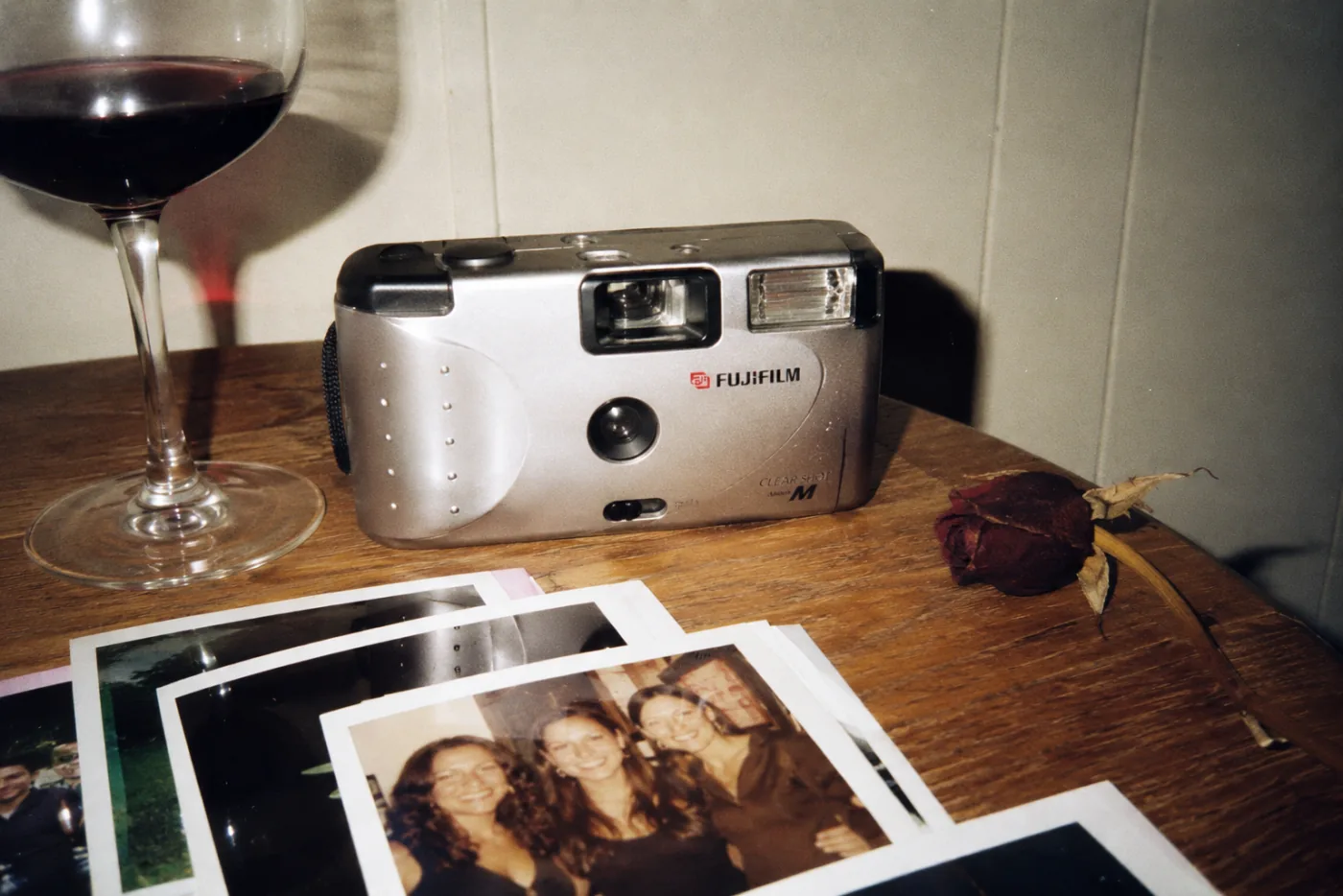
A digital disposable camera is a camera that lives on your phone but behaves like the single-use film camera you remember from parties and weddings. You get a limited number of shots, a film look on every frame, and you do not see the photos until later. It keeps the charm of analog and drops the film costs, the waiting at a lab, and the risk of losing the camera on a table.
The idea in plain terms
A classic disposable camera has three defining traits: a fixed number of exposures, a distinct film-and-flash look, and no screen to review your shots. A digital disposable camera copies those traits on purpose. You shoot inside an app or a web page instead of on physical film, but the constraints are the same. That is the point. The limits are what make the results feel special.
It is different from just adding a filter after the fact. A filter is something you choose later, on a photo you already framed and reviewed. A digital disposable camera bakes the look in while you shoot and hides the result until the end, so the experience feels like film, not like editing.
How a digital disposable camera works
The exact steps vary by product, but most digital disposable cameras follow the same shape:
- You open the camera, usually by scanning a code or tapping a link, so there is nothing to install.
- You get a set roll: a fixed number of shots for the event, not an endless stream.
- You shoot with a film look applied automatically and, in many cases, no live preview of the result.
- The photos stay hidden until a reveal moment, when the full roll appears at once.
Why the limits are the feature
When every shot counts, people slow down and frame with intention. A finite roll cuts the fifty near-identical burst shots down to a handful of pictures someone actually meant to take. The film look ties the whole set together, so a hundred phones do not produce a hundred mismatched styles. And the delayed reveal turns opening the album into its own small event, the way waiting for prints from the lab used to feel.
- Finite roll: fewer, more deliberate photos.
- Baked-in film look: one cohesive set instead of a jumble.
- No preview: you stay in the moment instead of chimping at a screen.
- Delayed reveal: a shared payoff at the end.
Digital disposable vs a physical one
| Digital disposable | Physical disposable | |
|---|---|---|
| Film look | Yes, applied in-camera | Yes, real film grain |
| Cost | One event, no lab | Per camera plus developing |
| Sharing | Instant shared album | Wait days for prints |
| Risk | Nothing to lose | Camera left on a table |
| Shots | Set roll per phone | Fixed exposures per camera |
Where lume fits
lume is one example of a digital disposable camera built for events. It is web-first, so guests open the camera in their phone browser after scanning a QR code, with nothing to download. Every photo gets a film look, each guest has a limited roll, and the host reveals the finished album when the moment is right. There is a one-time price per event, from free to a paid tier, rather than a subscription. You can see the details on the pricing page.
The verdict
A digital disposable camera is not a nostalgia gimmick. It is a deliberate set of limits, finite shots, a film look, and a delayed reveal, that shape how people shoot and how the photos feel afterward. If you want a cohesive, film-flavored album from a group, it beats both a folder of raw phone shots and the cost and wait of real film.
Is a digital disposable camera the same as a filter?
Not quite. A filter is applied after you take and review a photo. A digital disposable camera applies the look while you shoot and usually hides the result, so it feels like film rather than editing.
Do I need to download an app?
It depends on the product. Some are native apps. Others, like lume, run in the phone browser, so guests just scan a code and start shooting with nothing to install.
Why can't I see the photo right after I take it?
That is by design. Hiding the shot keeps you present at the event and makes the final reveal feel like opening a roll of prints.
How many photos do I get?
You get a set roll, a fixed number of shots for the event, rather than unlimited photos. The exact count depends on the product and how the host sets it up.
Is it cheaper than real disposable cameras?
Usually, especially at scale. There is no film to buy and no lab to pay, and you can cover a whole event for one price instead of buying and developing many cameras.
Got a party coming up?
Free for up to 5 guests · no app to download